


After a leak, burst pipe, or flooded basement, the first instinct for most homeowners is to grab every fan in the house and point it at the wet spots. A day or two later the carpet feels dry, the drywall looks fine, and it seems like the problem is solved. Unfortunately, that’s often when the real damage is just getting started.
Structural drying is the professional process of removing moisture from the building itself – the framing, subflooring, drywall, insulation, and wall cavities – not just the surfaces you can see and touch. It uses moisture mapping, industrial dehumidifiers, high-velocity air movers, and daily moisture readings to bring materials back to a verified safe, dry level. This guide explains what structural drying involves, why household fans can’t do the same job, and why Portland’s damp winter weather makes professional drying even more important.
What Is Structural Drying?
Structural drying is the step in water damage restoration that comes after standing water has been removed. Extraction gets the visible water out; structural drying gets the hidden water out. Building materials like drywall, wood framing, subflooring, and insulation are porous, and they soak up far more water than most people realize. That absorbed moisture doesn’t leave on its own just because the surface feels dry.
The goal of structural drying is simple: return every affected material to its normal, dry moisture level – confirmed with measurements, not guesswork – so the home is protected from mold, wood rot, warping, and structural weakening.
Why Fans Alone Can’t Dry a Water-Damaged Home
Household fans have their place, but they aren’t built for water damage. Here’s why they fall short:
- Fans only dry surfaces. A box fan moves air across the top of the carpet or the face of the drywall. It does nothing for water trapped in the carpet pad, the subfloor beneath it, or the inside of a wall cavity.
- Fans don’t remove moisture from the air. As water evaporates, it goes into the room’s air. Without a dehumidifier pulling that moisture out, humidity rises and the water simply settles back into materials – or into other rooms.
- Fans can spread the problem. Blowing air around a damp space can move moisture and mold spores into areas that were never wet to begin with.
- Dry to the touch isn’t dry. Drywall and wood can feel dry on the surface while still holding enough moisture inside to support mold growth. Without a moisture meter, there’s no way to know.
- It takes too long. Mold can start growing within 24-48 hours. Fans may take a week or more to make a surface feel dry – and the hidden moisture may never fully leave.
The result is a home that looks fine but is quietly developing mold, musty odors, swollen subfloors, delaminating cabinets, or rotting framing behind the walls.
The Professional Structural Drying Process
- Moisture Mapping and Thermal Imaging
Technicians start by finding out exactly where the water went. Thermal imaging cameras reveal cool, damp areas behind walls and under floors, and moisture meters measure how wet each material actually is. The readings are used to create a moisture map that guides the entire drying plan.
- Water Extraction
Any remaining standing water is removed with truck-mounted or portable extraction equipment. The more water removed at this stage, the faster structural drying goes. If water is still pooling, emergency water extraction comes first.
- Removing Materials That Can’t Be Saved
Some materials, like saturated carpet padding or insulation, are usually removed because they can’t be dried effectively. Technicians may also drill small holes or remove baseboards to let air reach inside wall cavities.
- Setting Up Air Movers and Dehumidifiers
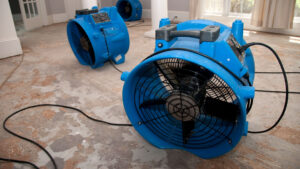
High-velocity air movers are positioned to push air across wet surfaces and into cavities, speeding up evaporation. At the same time, industrial dehumidifiers pull that moisture out of the air so it can’t be reabsorbed. Specialized tools like floor-drying mats and wall-cavity drying systems target areas standard equipment can’t reach.
- Daily Moisture Monitoring
Technicians check moisture levels every day, record the readings, and adjust equipment placement as materials dry. This is the key difference from DIY drying – progress is measured, not assumed.
- Final Verification
Drying isn’t finished until readings confirm every affected material has returned to a safe, normal moisture level. Most structural drying jobs take about 2 to 5 days, depending on how much water was involved, the type of materials affected, and how quickly drying began.
Why Portland’s Weather Makes Professional Drying Even More Important
From November through March, Portland’s weather is cool, cloudy, and damp, with frequent rain and high outdoor humidity. That makes natural drying extremely slow – opening the windows lets more moisture in rather than letting it out, and cooler temperatures slow evaporation even further.
In these conditions, wet materials can stay damp for weeks, giving mold and wood rot plenty of time to take hold. Older Portland homes with crawl spaces, basements, and original wood framing are especially vulnerable. Professional dehumidification controls the indoor environment regardless of what the weather is doing outside, so drying stays on schedule even in the middle of the rainy season.
How Structural Drying Supports Your Insurance Claim
Insurance companies expect homeowners to take prompt, reasonable steps to prevent further damage after a water loss. Professional structural drying helps show that you did. Daily moisture readings, equipment logs, and photos create a clear drying record that documents the extent of the damage and proves the property was dried to industry standards.
That documentation can make a real difference if an adjuster questions the scope of the damage, or if mold appears later and the insurer wants to know whether it could have been prevented. Without drying records, those questions are much harder to answer.
How ServPlus Water Damage Restoration Can Help
ServPlus Water Damage Restoration provides 24/7 professional structural drying for homes and businesses throughout Portland, Oregon City, Beaverton, Vancouver, WA, and the surrounding area. Our IICRC-certified technicians use thermal imaging, moisture meters, industrial air movers, and dehumidifiers to dry your property to verified safe moisture levels – not just until it feels dry.
We monitor progress daily, provide detailed drying logs for your insurance claim, and work directly with your adjuster. And because we handle everything from extraction to final water damage restoration and repairs, you won’t need to coordinate multiple contractors.
If your home has water damage, don’t rely on fans and hope for the best. Contact us today for fast, professional structural drying.
Call ServPlus Water Damage Restoration now: (503) 657-6000
Frequently Asked Questions
What is structural drying?
Structural drying is the professional process of removing moisture from a building’s framing, subfloors, drywall, and wall cavities after water damage.
Can I dry a water-damaged home with regular fans?
Fans only dry surfaces and don’t remove moisture from the air, so water trapped inside walls and floors usually stays behind.
How long does structural drying take?
Most structural drying jobs take about 2 to 5 days, depending on the amount of water and the materials affected.
How do professionals know when the home is fully dry?
Technicians take daily moisture meter readings and only finish once every affected material returns to a normal, safe level.
What happens if a home isn’t dried properly?
Hidden moisture can lead to mold growth, musty odors, warped flooring, and wood rot, often weeks after the leak seemed resolved.
Is structural drying covered by insurance?
It’s usually covered when the water damage itself is covered, and professional drying logs help document the claim.