


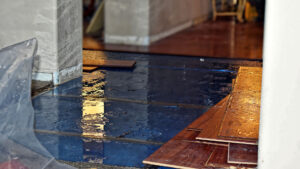
Hardwood floors add warmth, character, and real value to a home, so finding them soaked after a burst pipe, appliance leak, or storm can be very stressful. Many homeowners assume the floor is ruined. The truth is that many water-damaged hardwood floors can be saved when the response is fast and the drying is done correctly. Whether your floor can be dried in place or must be replaced depends on how the water reached it, how long it sat, and what the boards are made of. This guide walks through each of those factors so you know what to expect and what steps protect your flooring.
How Water Affects Hardwood Flooring
Wood is a natural material that absorbs and releases moisture, so it reacts quickly when water is spilled on it. The damage you see on the surface is often only part of the problem, because water also moves into seams, edges, and the layers beneath the boards. Knowing the common signs helps you judge how serious the situation is before a professional arrives.
Cupping and Crowning
Cupping happens when the edges of each board rise higher than the center, leaving a shallow, wavy pattern across the floor. It is caused by moisture building up on the underside of the boards, which makes the bottom swell more than the top. Crowning is the opposite, where the center of the board sits higher than the edges, and it often shows up when a cupped floor is sanded flat before it has fully dried. Both conditions can often be reversed with controlled drying, which is why sanding or refinishing should always wait until moisture readings return to normal.
Buckling
Buckling is the most severe form of water damage to hardwood, and it occurs when boards swell so much that they lift away from the subfloor. In some cases, whole sections of the floor can rise several inches, pulling nails and fasteners loose along the way. This usually points to prolonged exposure or a large volume of water that reached the subfloor. While buckled boards are more likely to need replacement, a careful assessment can still identify nearby areas that can be dried and kept.
Hidden Moisture in the Subfloor
One of the biggest risks with water-damaged hardwood floors is the moisture you cannot see. Water often slips between the boards and soaks into the plywood or OSB subfloor, where it can remain trapped long after the surface looks dry. That hidden moisture slowly works its way back up into the wood, causing cupping weeks later and creating the damp conditions mold needs to grow. This is why surface wiping and household fans are rarely enough to fully dry a hardwood floor.
What Determines Whether Boards Can Be Saved
There is no single answer to whether a water-damaged hardwood floor can be saved, because every water loss is different. Three main factors guide the decision between drying in place and replacing the boards. Understanding them helps homeowners make sense of the recommendations they receive during an inspection.
Water Category
The source of the water plays a major role in what can be kept. Category 1 water from a clean supply line gives the best chance of drying and saving the floor. Category 2 gray water from a dishwasher or washing machine requires extra cleaning and closer evaluation, since it carries contaminants. Category 3 black water from sewage backups or outside flooding usually means affected boards must be removed, because porous wood cannot be reliably sanitized once it has absorbed contaminated water.
How Long the Water Sat
Time is the factor homeowners have the most control over. Clean water that is removed within a few hours often leaves only minor swelling that responds well to drying. As the hours pass, the wood absorbs more water, the subfloor becomes saturated, and the chance of permanent warping grows. Water left for several days greatly increases the risk of buckling, finish damage, and mold, making replacement far more likely.
Wood Species and Floor Construction
Not all hardwood behaves the same way when wet. Dense species like oak and maple tend to handle moisture better than softer woods, and solid hardwood can often be sanded and refinished after drying. Engineered hardwood has a thin top layer over plywood, which limits how much refinishing it can take and makes it more prone to delamination. The way the floor was installed, whether nailed, glued, or floating, also changes how water spreads and how the floor must be dried.
Why the First 24-48 Hours Matter Most
The first one to two days after a leak are the window in which most hardwood floors are either saved or lost. During this time, professional extraction and controlled drying can pull moisture out of the boards and subfloor before permanent changes set in. Waiting beyond this point raises the risk of mold, warping, and a much larger repair bill.
Why Portland’s Damp Fall Weather Slows Drying
Portland’s fall season brings steady rain, cool temperatures, and high humidity, and those conditions make natural drying very slow. When the air inside a home is already damp, wet wood has nowhere to release its moisture, so open windows and box fans often do little. Cooler temperatures also slow evaporation, which allows water to stay in the subfloor longer. This is why professional dehumidification and structural drying are especially important for Portland-area homes during the wetter months.
How ServPlus Water Damage Restoration Saves Hardwood Floors
ServPlus Water Damage Restoration approaches every hardwood floor with the goal of saving as much original flooring as possible. Our IICRC-certified technicians combine fast extraction with careful moisture monitoring so drying decisions are based on real data. This approach protects both the floor and your budget as part of our full water damage restoration service.
Moisture Mapping With Professional Meters
Every job begins with moisture meters and thermal imaging that show exactly where water has traveled. Our technicians take readings across the boards, along the walls, and into the subfloor to map the full extent of the damage. These readings set a drying goal based on the moisture level of unaffected wood in your home. Daily checks then confirm that drying is on track and show when the floor is ready for any repairs or refinishing.
Floor-Drying Mats and Dehumidification
Specialized floor-drying mats are placed directly on the hardwood and connected to vacuum systems that draw moisture up through the boards and seams. At the same time, industrial dehumidifiers and air movers lower the humidity in the room, giving the wood a dry environment to release water into. This controlled method dries the floor evenly, which helps reduce cupping without causing cracks from drying too fast. When moisture has spread into nearby walls or created mold risk, our team can also coordinate mold remediation services during the same project.
Documentation for Your Insurance Claim
Hardwood flooring is expensive, so clear records are essential when filing a claim. ServPlus Water Damage documents each loss with detailed photos, daily moisture logs, and an itemized scope of work that shows what was dried and what had to be replaced. We are also glad to communicate directly with your insurance adjuster to keep the process moving smoothly. This documentation supports a fair claim and reduces disputes about the extent of the damage.
Call ServPlus Water Damage for Fast Hardwood Floor Water Damage Repair
If water has reached your hardwood floors, the best time to act is right now, before moisture settles deeper into the subfloor. ServPlus Water Damage Restoration responds 24/7 across the Portland metro area and Vancouver, WA, with the equipment and training to dry floors correctly. Contact us or call (503)-657-6000 for fast, professional water damage repair.
Frequently Asked Questions
Can water-damaged hardwood floors be saved?
In many cases, yes, especially when the water is clean and extraction starts within the first 24-48 hours. A professional moisture inspection is the most reliable way to confirm whether your boards can be dried in place.
Will cupped hardwood floors go back to normal?
Cupped boards often flatten as they dry, as long as the moisture is removed from both the wood and the subfloor. Sanding should always wait until moisture readings return to normal to avoid crowning later.
How long does it take to dry a hardwood floor?
Most hardwood floors take several days to two weeks to dry with professional equipment. The timeline depends on the amount of water, the wood species, and the humidity inside the home.
Can I dry my hardwood floor with fans?
Fans can help move surface air, but they cannot remove water trapped in the subfloor. Without dehumidification and floor-drying mats, hidden moisture often causes warping or mold weeks later.
Does insurance cover water-damaged hardwood floors?
Many homeowner policies cover sudden water damage, such as a burst pipe or appliance failure. Thorough documentation from a restoration company helps support your claim and the scope of repairs.
When does hardwood flooring need to be replaced?
Replacement is usually needed when the floor has buckled severely, absorbed sewage or floodwater, or stayed wet for several days. Engineered boards that have delaminated also typically need to be replaced.