


The flames are out, the smoke alarm has stopped, and the damage looks small – maybe a scorched cabinet, a blackened range hood, and a haze hanging near the ceiling. So is it safe to stay in your home after a kitchen fire? The honest answer: not until you know what the fire left behind. Even a small, quickly contained kitchen fire can leave smoke particles in the air, acidic soot on surfaces and inside ductwork, and hidden damage to wiring or gas lines that you can’t see from the doorway.
With Thanksgiving and the holiday cooking season here, kitchen fires are more common than at any other time of year. This guide walks Portland homeowners through the hidden risks after a kitchen fire, the clear signs that your family should stay somewhere else for now, and what to do in the first 24-48 hours to protect your health, your home, and your insurance claim.
Why a “Small” Kitchen Fire Isn’t Always Small
Kitchen fires usually start with grease, oil, or food left on a hot burner, and they burn hot and fast. Even when the fire itself stays on the stovetop, the smoke doesn’t. It rises, spreads through the house, and gets pulled into your HVAC system within minutes. That means the damage often reaches rooms that never saw a flame – bedrooms, hallways, closets, and the ductwork that connects them.
This is why the visible damage in the kitchen is rarely the full picture, and why a professional assessment matters even after a fire that seemed minor.
The Hidden Dangers That Linger After a Kitchen Fire
- Smoke and Soot Particles in the Air
Smoke from a kitchen fire contains fine particles that stay suspended in the air long after the visible haze clears. These particles can irritate the eyes, throat, and lungs, and they are especially hard on children, older adults, pets, and anyone with asthma or other respiratory conditions. Opening windows helps, but it doesn’t remove the residue that has already settled on surfaces and in fabrics.
- Acidic Soot Residue on Surfaces
Soot is acidic, and it starts working on your home right away. Left in place, it can stain and etch countertops, cabinets, walls, and grout, and corrode metal fixtures, appliances, and electronics. Kitchen fires often produce greasy, protein-based residue that is especially difficult to clean and tends to smear when wiped with household products – which can spread the damage instead of removing it.
- Contaminated HVAC Systems and Ductwork
If your heating system was running during or after the fire, it likely pulled smoke and soot into the ducts. Every time the system turns on, it can blow that residue back into the living space and spread smoke odor throughout the house. With Portland heading into the colder months, running the furnace before the system is inspected and cleaned can turn a kitchen problem into a whole-home problem.
- Electrical and Gas Line Damage
Heat from a kitchen fire can damage wiring behind the walls, outlets near the stove, and the electrical connections to appliances. Gas ranges add another risk – heat can loosen fittings or damage the gas line itself. Damage like this isn’t always visible, but it can create a fire or shock hazard later.
- Water Damage From Putting the Fire Out
If a sprinkler, extinguisher, or fire department hose was used, water may have soaked into cabinets, subflooring, and the wall cavities behind the range. Trapped moisture can lead to mold growth within 24-48 hours, which is why structural drying is often part of fire restoration even after small kitchen fires.
Signs You Should Stay Somewhere Else for Now
It’s best to stay with family, friends, or in temporary lodging until your home has been assessed if you notice any of the following:
- A strong smoke odor throughout the house, not just in the kitchen
- Visible soot on walls, ceilings, or vents in rooms outside the kitchen
- Headaches, coughing, burning eyes, or trouble breathing while inside
- A gas smell, or any concern that the gas line or range was damaged
- Outlets, switches, or appliances that spark, buzz, feel warm, or stopped working
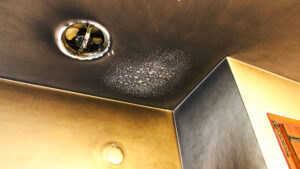
- Scorch marks on the ceiling, upper cabinets, or the wall behind the stove
- Standing water or wet flooring and cabinets from firefighting efforts
- Anyone in the household who is pregnant, very young, elderly, or has asthma or another respiratory condition
- The fire department or a utility company advised you not to stay
If any of these apply, leaving for a few days is the safer choice. Many homeowner’s insurance policies include Additional Living Expenses (ALE) coverage that can help pay for temporary lodging while your home is restored, so check with your insurer before you assume you have to stay.
What to Do in the First 24-48 Hours After a Kitchen Fire
- Make sure the fire is fully out. If the fire department responded, follow their instructions about when you can go back inside.
- Turn off the HVAC system so it doesn’t spread smoke and soot through the ducts.
- Shut off gas to the range if you suspect any damage, and call your gas utility if you smell gas.
- Don’t use damaged appliances or outlets until they’ve been checked.
- Take photos and video of all visible damage before any cleanup begins.
- Avoid scrubbing soot yourself. Wiping or using household cleaners on soot often smears it deeper into surfaces and can make professional cleaning harder.
- Don’t throw anything away until it has been documented for your insurance claim.
- Call your insurance company to report the fire and ask about ALE coverage.
- Call a certified fire restoration company to assess safety, start cleanup, and document the full scope of damage.
Acting within this window matters. Soot keeps corroding surfaces and smoke odor keeps soaking into porous materials with every day that passes – the longer it sits, the more likely materials will need to be replaced instead of cleaned.
How Professionals Make Your Home Safe Again
A professional fire damage restoration team does more than clean what you can see. The process typically includes:
- Safety assessment – checking for structural, electrical, and air quality concerns before cleanup begins
- Soot and smoke residue removal – using cleaning methods matched to the type of residue, including greasy, protein-based kitchen soot
- HVAC and duct cleaning – removing smoke and soot from the system so it doesn’t recirculate
- Odor elimination – using air scrubbers, thermal fogging, and odor-neutralizing treatments to remove smoke odor at the source, not just mask it
- Water removal and drying – extracting water and drying cabinets, subfloors, and walls to prevent mold
- Repairs – replacing damaged cabinets, drywall, flooring, and finishes to restore your kitchen
How ServPlus Water Damage Restoration Helps After a Kitchen Fire
ServPlus Water Damage Restoration provides 24/7 emergency fire and smoke damage restoration for homeowners throughout Portland, Oregon City, Beaverton, Vancouver, WA, and the surrounding area. Our IICRC-certified technicians assess whether your home is safe to stay in, remove soot and smoke odor at the source, clean HVAC systems, and handle drying and repairs – all under one team.
We also document every step with detailed photos and itemized reports and work directly with your insurance company, including on temporary living expenses and repair costs, so you can focus on your family instead of the paperwork.
If you’ve had a kitchen fire this holiday season – even a small one – don’t guess about whether your home is safe. Contact us for a fast, certified assessment.
Call ServPlus Water Damage Restoration now: (503) 657-6000
Frequently Asked Questions
Is it safe to stay in my house after a small kitchen fire?
It can be, but only after the home has been checked for lingering smoke, soot in the HVAC system, and electrical or gas damage.
How long should I stay out of my house after a kitchen fire?
It depends on the damage – a few days for smoke cleanup and air treatment, or longer if repairs or water drying are needed.
Can smoke from a kitchen fire make you sick?
Yes, smoke and soot particles can irritate the eyes, throat, and lungs, especially for children, older adults, and people with asthma.
Should I run my heat or AC after a kitchen fire?
No, keep the HVAC system off until it’s inspected, since it can spread smoke and soot throughout the house.
Can I clean up kitchen fire soot myself?
It’s not recommended, because wiping soot with household cleaners often smears it deeper into surfaces and makes professional cleaning harder.
Does homeowner’s insurance cover a hotel stay after a kitchen fire?
Many policies include Additional Living Expenses coverage for temporary lodging, and ServPlus works with your insurer to document the need.